
The Architect Who Dealt in Prints
Art & architecture · Japan
By Gohachi Books
Frank Lloyd Wright is remembered for his buildings. For decades he was also one of America's great dealers in Japanese woodblock prints, a second career of fortunes spent, scandal and forced sales.
Published October 2026 · About a 5-minute read
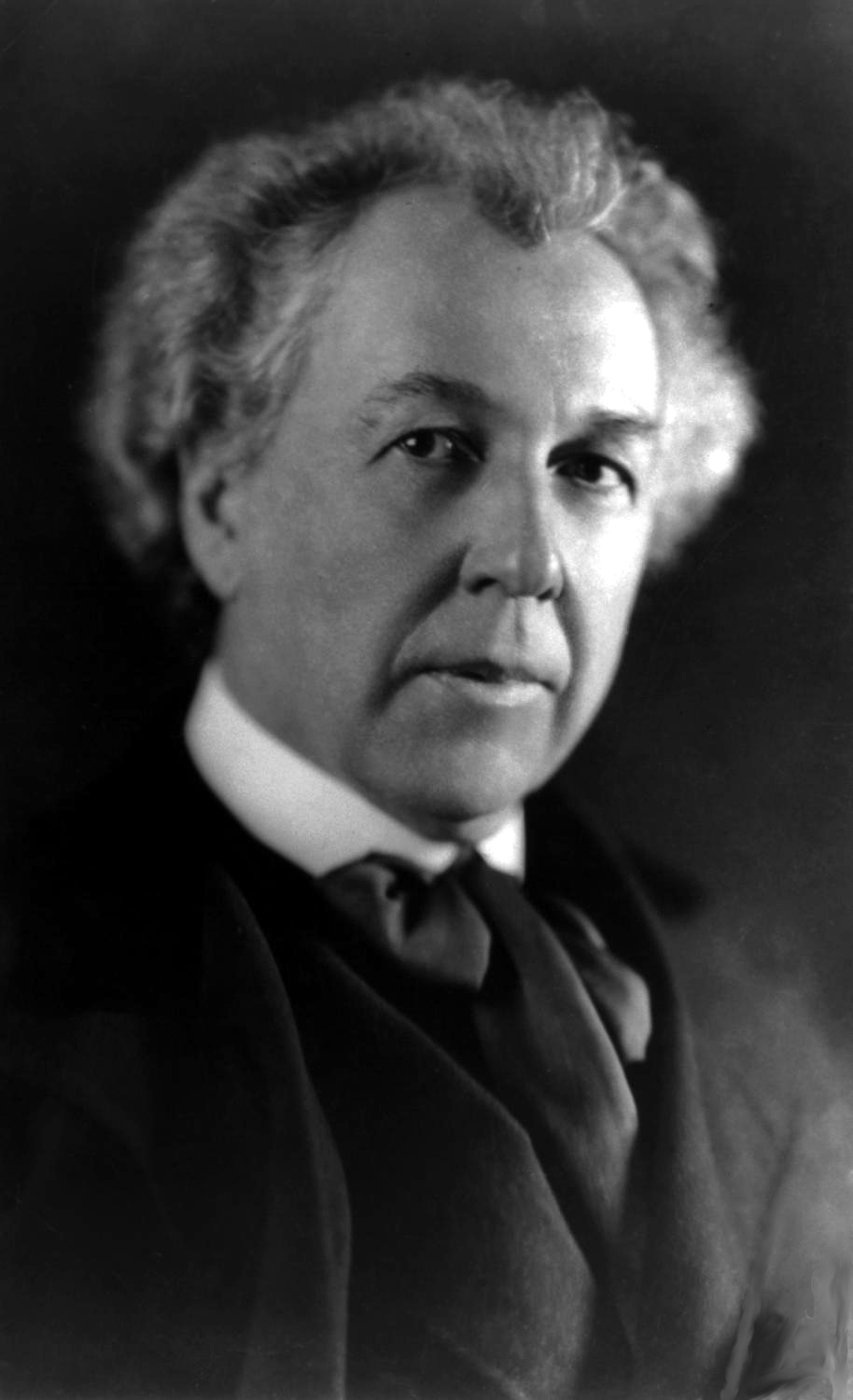
On our shelves at Gohachi is a slim auction catalogue: Parke-Bernet Galleries, New York, 1969, Sale 2937, Fine Japanese Prints. The name on it is not a print collector you would expect. It is Frank Lloyd Wright.
Most people know Wright as America's most famous architect, the designer of Fallingwater and the Guggenheim. Far fewer know that for the first three decades of the twentieth century he was also one of the most important dealers in Japanese prints in America, and that the prints shaped the way he saw the world.
“If Japanese prints were to be deducted from my education, I don't know what direction the whole might have taken.”
“An Intoxicating Thing”
The prints in question are ukiyo-e, “pictures of the floating world”: colour woodblock prints of actors, beauties and landscapes, made in Japan from the seventeenth to the nineteenth centuries. Wright's favourites were the landscape masters Katsushika Hokusai and Utagawa Hiroshige.
“When I first saw a fine print,” he wrote in 1917, “it was an intoxicating thing.”
In February 1905, aged 37, he sailed to Japan for the first time. He spent about three months touring temples and gardens, and buying: prints, textiles, stencils and pattern books.
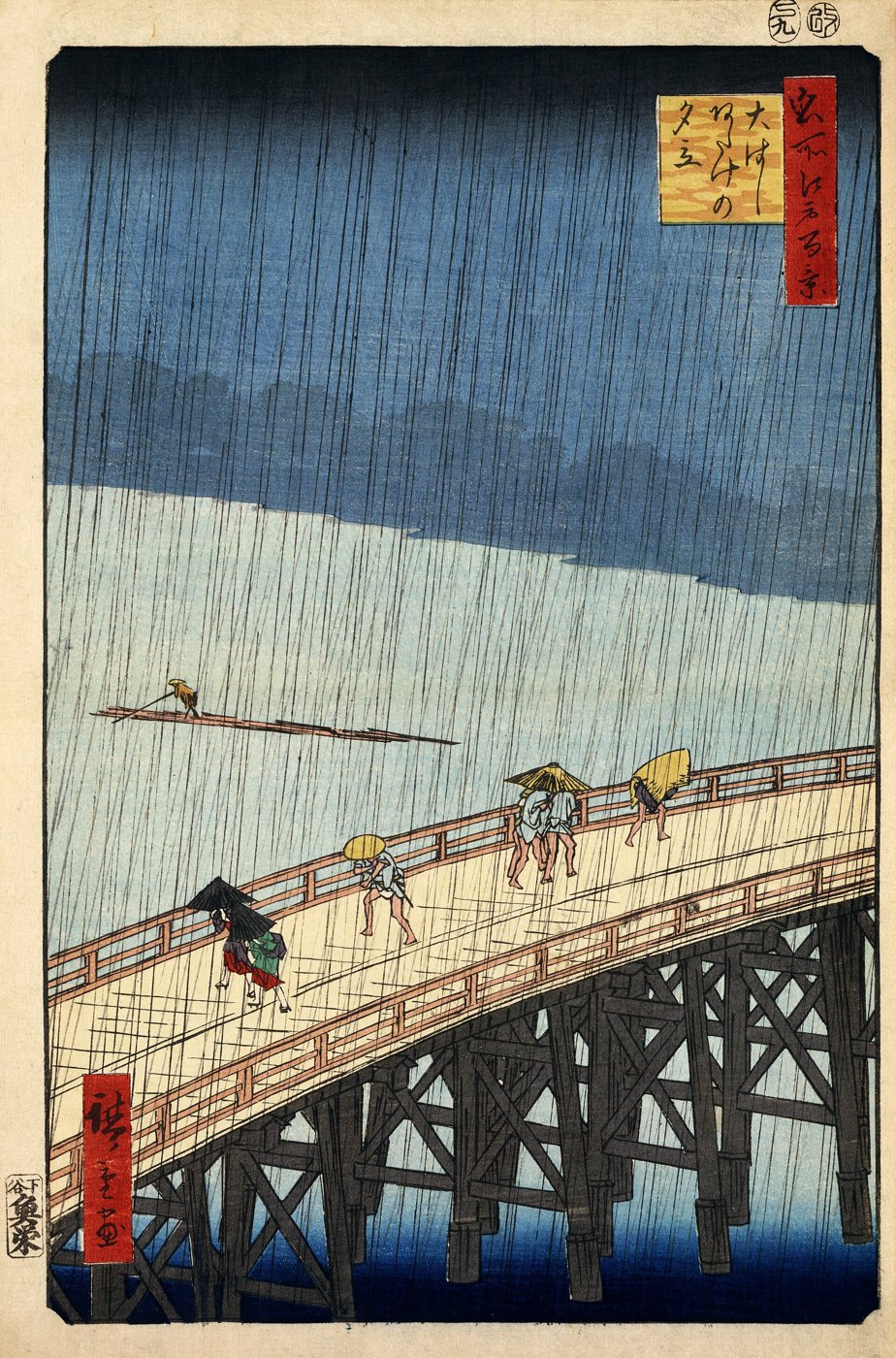
The First Hiroshige Show
The following spring, from 29 March to 18 April 1906, the Art Institute of Chicago showed 213 Hiroshige prints from Wright's own collection. It is described as the first retrospective of the artist's work ever held. Wright curated it, designed the display and wrote the catalogue.
In 1912 he set out his ideas in a small book, The Japanese Print: An Interpretation, published in Chicago by Ralph Fletcher Seymour. “The print,” he declared, “is more autobiographical than may be imagined.”
America's Foremost Dealer
Wright did not only collect. He bought for others, and he sold, on a scale that is still startling.
In 1910 the Chicago collector Clarence Buckingham paid him about $21,000 for prints. In 1913 the Boston brothers William and John Spaulding gave Wright $20,000 to buy prints for them in Japan; in roughly five months he spent $125,000 of their money. The Spauldings went on to promise nearly seven thousand prints to the Museum of Fine Arts, Boston. Around 1914 Wright even drew a Japanese print gallery for William Spaulding.
He sold to the Metropolitan Museum of Art too: two sales in 1918 alone came to $20,000. Prints that passed through his hands now sit in the Art Institute of Chicago, the Met, the Museum of Fine Arts in Boston and many other collections.
Fifty Thousand Dollars in Two Hours
From 1917 to 1922 Wright lived and worked largely in Tokyo, building the Imperial Hotel. It put him at the source of the market. His Tokyo and Yokohama bank books for 1919 show payments to at least eight print dealers.
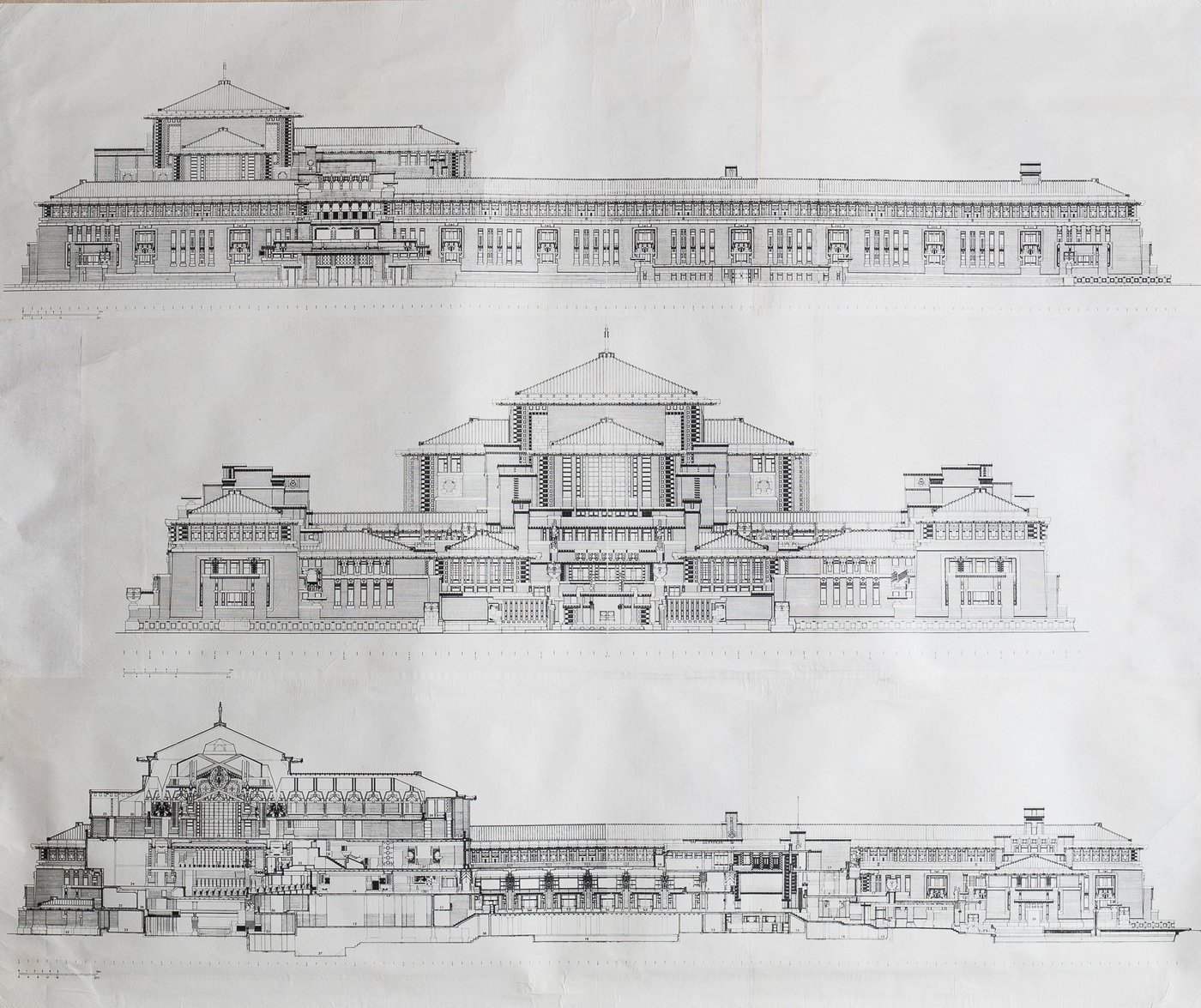
In 1920, on a single visit to a dealer at Nikko, he is recorded as having “spent $50,000 in two hours”. In all, the Metropolitan Museum's own account of his dealing estimates that Wright spent nearly half a million dollars on prints in Japan.
The Revamped Prints
Then came the scandal. In 1920 some of the prints Wright had sold were found to have been “revamped”: old impressions touched up with fresh colour to look brighter and finer than they were.
Wright took back and exchanged the bad prints. In October 1922 the Metropolitan's curator of Far Eastern art, Bosch-Reitz, wrote to him that prints he had left there had been revamped too. Wright replied within the week: “There is no intention on my part to deceive you or anyone else – I think you know this.”
In Japan the affair went to court. A Japanese court gave the dealer Kyūgo Hayashi a one-year prison sentence.
Wright made his last purchase from a Japanese dealer in 1923. He never went back to Japan.
Selling Up
The prints that had paid for so much became, in hard times, something to sell. On 6 and 7 January 1927 the Anderson Galleries in New York auctioned The Frank Lloyd Wright Collection of Japanese Antique Prints, “to be sold by order of Bank of Wisconsin, Madison, Wisconsin”.
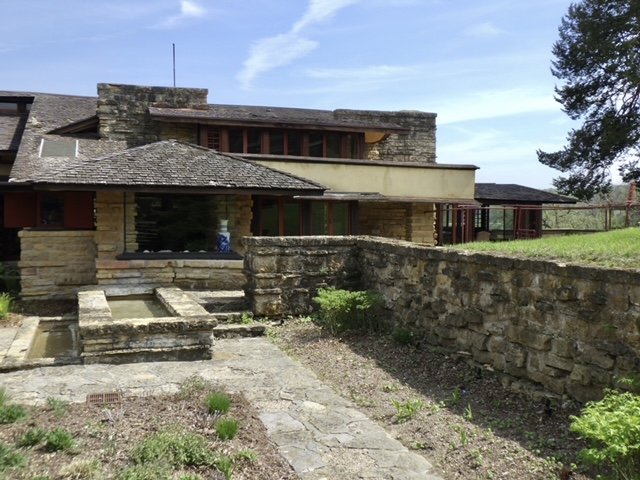
He kept collecting all his life. When he died in 1959 his widow, Olgivanna, still held a great quantity of Japanese prints. After the American tax authorities ruled that the Frank Lloyd Wright Foundation had been wrongly treated as tax-exempt, she had to sell a large part of his art. A selection of the prints was shown in Los Angeles in 1962, and UCLA's Grunwald Center for the Graphic Arts went on to acquire more than 560 of them.
Prints from his collection went on coming to market in the years that followed. In 1969 one of them was a New York sale at Parke-Bernet, and its catalogue is the one on our shelf.
The Catalogue on Our Shelf
[PHOTO TO COME: our copy of the 1969 Parke-Bernet catalogue]
An auction catalogue is easy to overlook: a paper-covered book, printed for one sale, read for a week and usually thrown away. But for collectors it is a primary document. It records which prints were sold, how they were described and, in a priced copy, what they fetched. It is often the only way to trace a print back to a famous owner.
That is why catalogues like ours matter. Every print that left Wright's hands carries a story, and the catalogues are how the trail is followed.
Wright once said that through the arts of Japan, “I began to see nature in a totally different way.” He said it to his apprentices at the age of ninety. More than half a century earlier, a few sheets of coloured paper from the floating world had shown him how.
Researched and written for Gohachi Books, October 2026, from museum, scholarly and archival sources listed below.
Sources
• Wright's Japan 1905: Wright curates first Hiroshige exhibition in US
• Hammer Museum, UCLA: Wright and the Architecture of Japanese Prints
• Smithsonian Magazine: Frank Lloyd Wright's Japanese Education
• Antiques and The Arts Weekly: The Architect's Other Passion
• ABAA: The Japanese Print: An Interpretation, first edition, 1912
Wright and the prints
- 1905
- First trip to Japan
- 1906
- 213 Hiroshige prints at the Art Institute of Chicago
- 1912
- The Japanese Print: An Interpretation
- 1913
- Buys for the Spaulding brothers of Boston
- 1917–22
- In Tokyo, building the Imperial Hotel
- 1920–22
- The "revamped prints" affair
- 1927
- His collection auctioned for the Bank of Wisconsin
- 1959
- Dies; prints later sold
- 1969
- Parke-Bernet sale 2937, our catalogue
Researched and written for Gohachi Books, October 2026, from museum, scholarly and archival sources listed below.


