
The Naval Captain Who Followed Butterflies
History & ephemera · Sussex
By Gohachi Books
The remarkable story of Captain Tristan Dannreuther (1872–1963), revealed by a forgotten piece of correspondence.
Published October 2026 · About a 8-minute read
Sometimes the most fascinating discoveries in the world of second-hand books are not books at all.
A forgotten envelope, a handwritten inscription, an old photograph or a letter slipped between pages can reveal a history far more extraordinary than its modest appearance suggests.
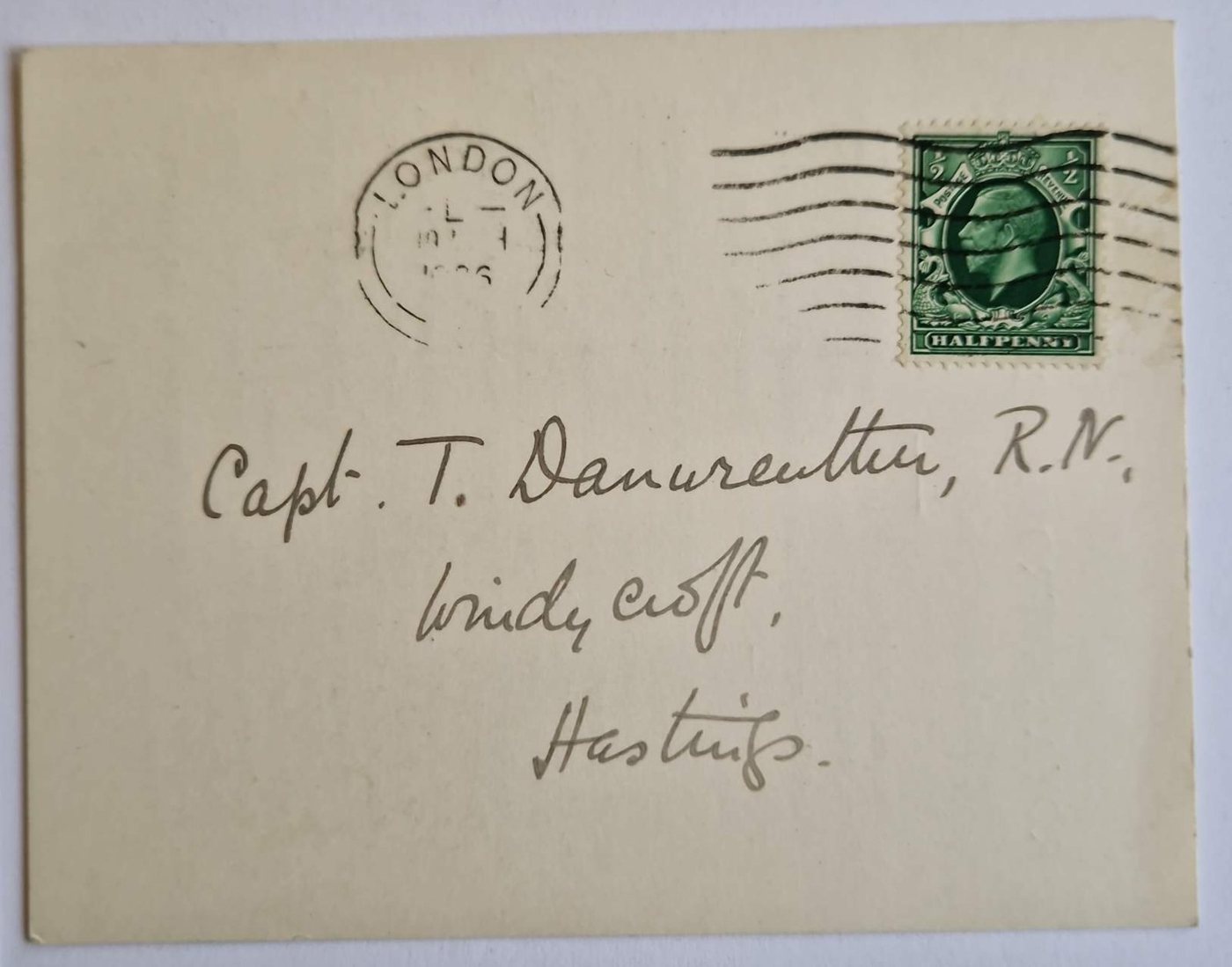
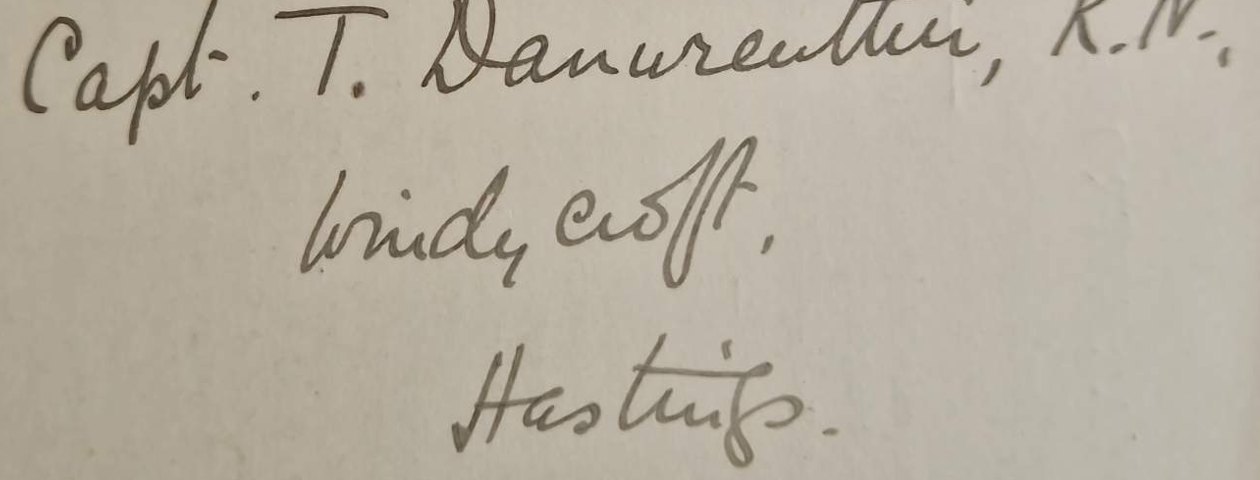
One such discovery at Gohachi Books was tucked inside a 1922 copy of General Astronomy by H. Spencer Jones: an envelope addressed in elegant handwriting to:
It bears a green halfpenny stamp depicting King George V and a faint London postmark from 1936.
At first glance, nothing especially remarkable. But behind those few handwritten words lies the story of a Royal Navy captain, a decorated First World War veteran, an intelligence officer, a naturalist, and a family whose connections reached into the worlds of Wagner, William Morris and the Pre-Raphaelites.
His name was Tristan Dannreuther.
A Childhood Among Artists and Musicians
Tristan Dannreuther was born in London in 1872, the eldest son of Edward George Dannreuther and Chariclea Ionides.
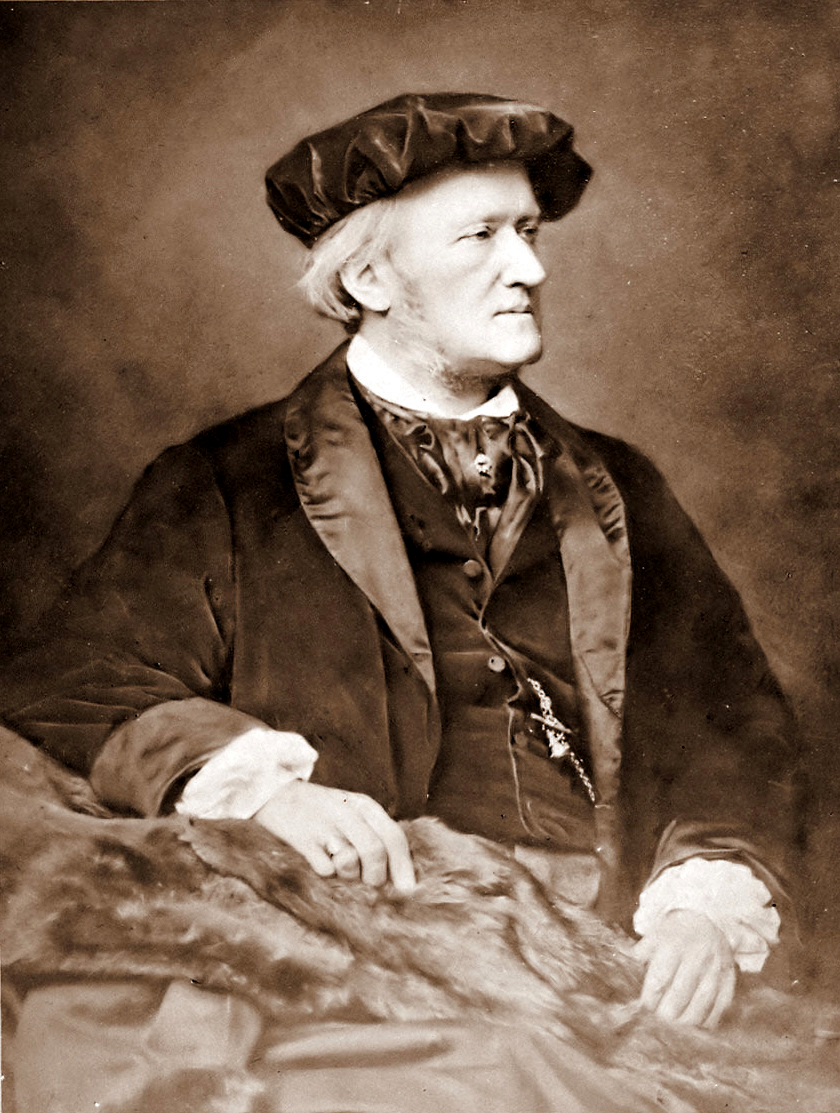
His father was no ordinary musician. Edward Dannreuther was a distinguished pianist, teacher and writer who became one of the leading British champions of the German composer Richard Wagner.
In 1877, Wagner himself stayed at the Dannreuther family home in Orme Square, London. Tristan was then only four years old.
His mother came from the wealthy and culturally influential Ionides family, whose friendships and patronage helped shape Victorian artistic life.
The family's circle included figures associated with the Pre-Raphaelite movement, among them Dante Gabriel Rossetti and William Morris. Tristan's maternal uncle Constantine Ionides became a notable art collector, eventually leaving his collection to the Victoria and Albert Museum.
It was an extraordinary environment in which to grow up: a world of artists, composers, collectors and intellectual conversation.
Yet rather than follow his father into music, Tristan chose a very different calling.
He went to sea.
From Victorian Naval Cadet to Wartime Captain
In 1885, aged thirteen, Tristan entered the Royal Navy as a cadet and began his training aboard HMS Britannia.
Two years later he was serving as a midshipman aboard HMS Garnet, bound for the East Indies.
Over the following decades, his career took him through the Mediterranean, the Red Sea, the Pacific, Chinese waters and the seas around Britain.
He developed particular expertise in navigation. In 1896, while serving at Suakin on the Red Sea coast of Sudan, his work handling and berthing vessels bringing troops ashore earned official appreciation from the Indian Government.
He was also technically inventive. In 1899 the Admiralty thanked him for describing a new method of illuminating ships' compasses electrically, and later acknowledged his careful work studying compass deviations.
By 1906 he had achieved the rank of Commander.
When the First World War came, Dannreuther's long naval experience would be put to the test.
Hunting a German Cruiser off Africa
One of the most dramatic episodes of his wartime service came in 1915, when he commanded HMS Kinfauns Castle, an armed merchant cruiser operating off East Africa.
British naval forces were attempting to locate and destroy the German cruiser SMS Königsberg, which had taken refuge in the waterways of the Rufiji Delta.
The operation involved warships, coastal reconnaissance and an early use of aircraft in the search for an enemy vessel.
Kinfauns Castle served as a base for an aircraft engaged in locating the German cruiser. The campaign eventually ended with the destruction of Königsberg in July 1915.
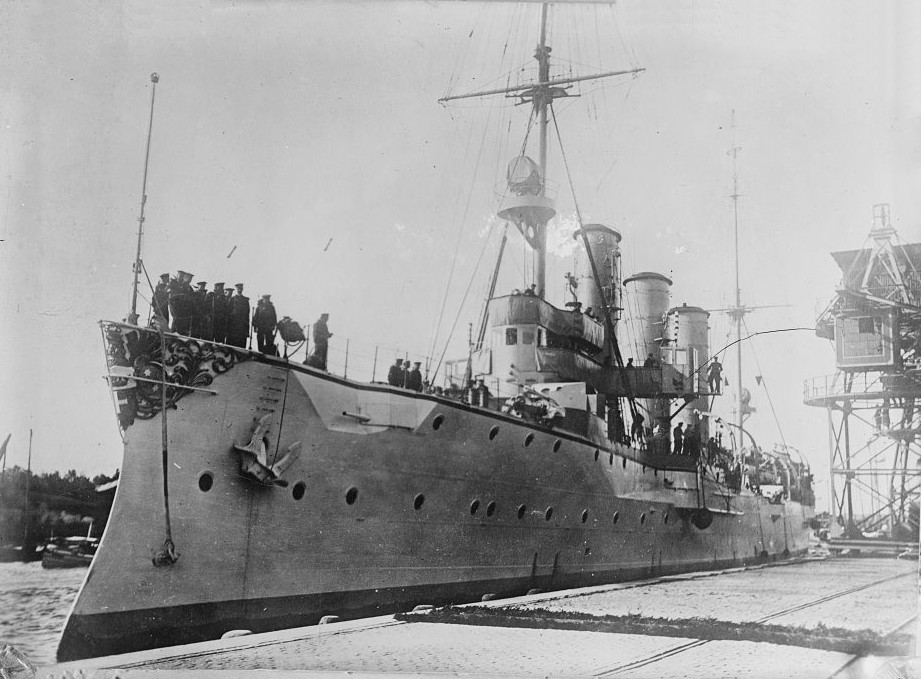
Dannreuther subsequently commanded HMS Patuca, a vessel used for kite balloons and patrol duties, during operations in northern waters.
He was promoted to Captain in 1918.
His wartime service brought him the French Legion of Honour, and in 1919 he was mentioned in despatches for valuable services during the conflict.
After the war, he took up one of his most significant appointments: Assistant Director of Naval Intelligence, a post he held from 1919 to 1921.
He retired from the Royal Navy in 1922.
The Dannreuther Family and the Tragedy of Jutland
There is another remarkable chapter to this family's naval history.
Tristan's younger brother, Hubert Edward Dannreuther, also pursued a distinguished naval career.
At the Battle of Jutland on 31 May 1916, Hubert was serving aboard HMS Invincible, one of the Royal Navy's battlecruisers.
During the fighting, the ship suffered a catastrophic magazine explosion and broke apart.
More than a thousand men were lost.
Hubert was one of just six survivors.
He lived to tell the story, later rising to the rank of Rear-Admiral.
For the Dannreuther family, the First World War was not merely a distant conflict. It was a period of danger, loss and extraordinary personal experience.
Windycroft: A Remarkable House in Hastings
The address on our envelope leads to another discovery.
Windycroft, in High Wickham above Hastings Old Town, was the Dannreuther family home.
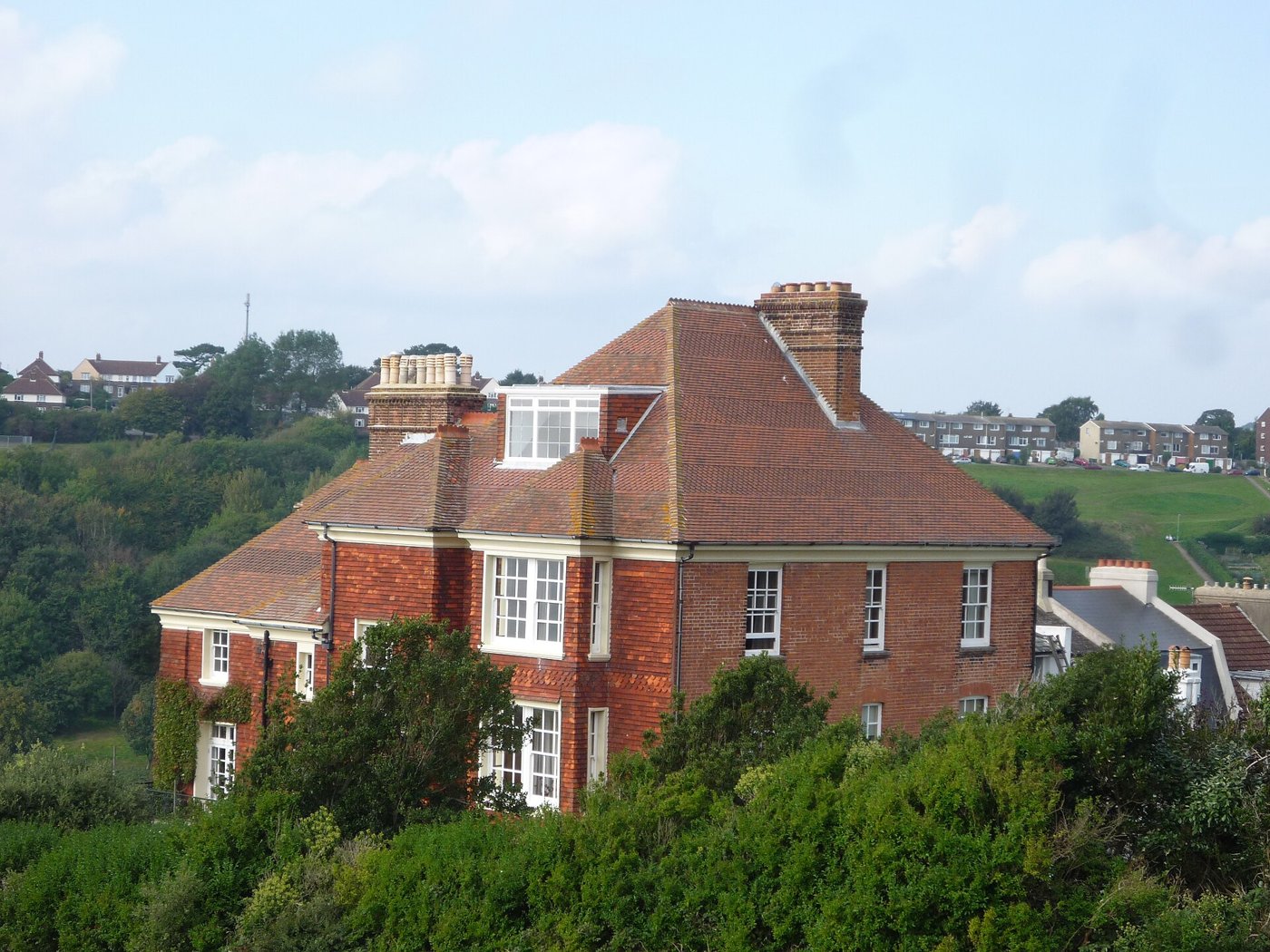
Developed in the late nineteenth century through the family's Ionides connections, the house reflected the artistic tastes and relationships of its owners.
It contained an acoustically designed music room, mosaic floors, a grand staircase hall, original William Morris wallpaper and decorative tiles by William De Morgan.
Windycroft was an expression of the Arts and Crafts world from which Tristan had emerged.
Today, the property is protected as a Grade II* listed building, recognised particularly for its remarkable interiors.
Following his retirement from naval service, Tristan made Hastings his permanent home.
The man whose career had taken him across oceans returned to a house filled with the artistic legacy of his childhood.
And here, another side of his life came increasingly into focus.
The Captain Who Studied Butterflies
Perhaps the most unexpected discovery about Tristan Dannreuther is that he was an accomplished naturalist.
Alongside his naval career, he had developed interests in geography, astronomy and the natural sciences.
But it was his work with insects, particularly butterflies, moths and dragonflies, that would give him a lasting place in British natural history.
During the 1930s he became involved in organised efforts to understand the migration of insects into Britain.
In 1934, a natural-history publication identified Captain T. Dannreuther of Windycroft, Hastings, as secretary of a scheme gathering observations of immigrant insects.
Among the species being studied were the Painted Lady butterfly, the Red Admiral, Clouded Yellows and the Silver Y moth.
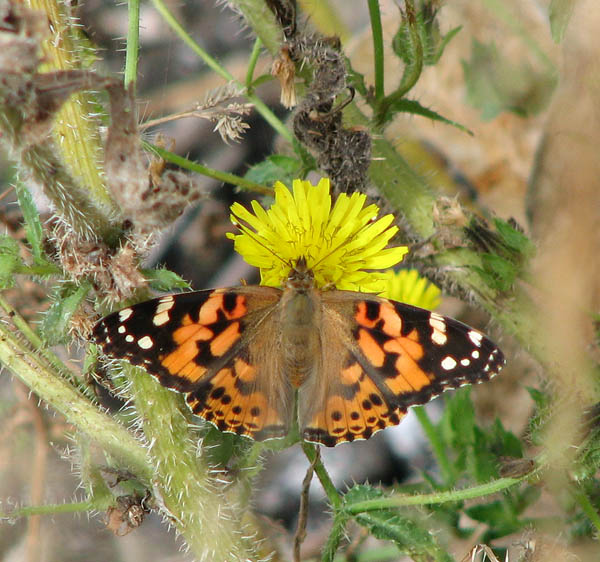
These were not simply collecting curiosities. Observers were helping to establish which insects arrived from elsewhere, when they appeared and how widely they travelled.
Long before today's sophisticated tracking technologies, such research depended upon patient observation and the careful accumulation of records.
Dannreuther contributed to that work over many years.
His studies included The Dragonflies of East Sussex, published in 1939, and a series of annual reports documenting insect migration.
His scientific writing continued well into the 1950s.
Even now, historical accounts of Sussex dragonflies refer to his observations.
There is something wonderfully appealing about this second career.
A man trained to navigate the world's oceans devoted his later life to understanding the journeys of creatures small enough to settle on a fingertip.
The Book on the Shelf
The envelope did not come to us on its own. It was tucked inside a copy of General Astronomy by H. Spencer Jones, published by Edward Arnold in 1922.
Inside the book is an ownership stamp: Windycroft, High Wickham, Hastings.
[PHOTO TO COME: the Windycroft stamp in General Astronomy]
It is a fitting book to find in this house. Spencer Jones was then Chief Assistant at the Royal Observatory, Greenwich, and would go on to become Astronomer Royal. His book covers not only the motions of the heavens but the methods of navigation and position-finding at sea.
For a retired naval officer whose career had been built on navigation, and who counted astronomy among his interests, it is exactly the book one would expect to find on the shelf.
The stamp names the house rather than the man, and Windycroft was a family home. But it is hard to imagine a reader in that household better suited to it than the captain.
What Was Inside the Envelope?
The surviving envelope offers one further historical clue.
Its green King George V halfpenny stamp belongs to a period when Britain's postal system offered a reduced rate for printed material.
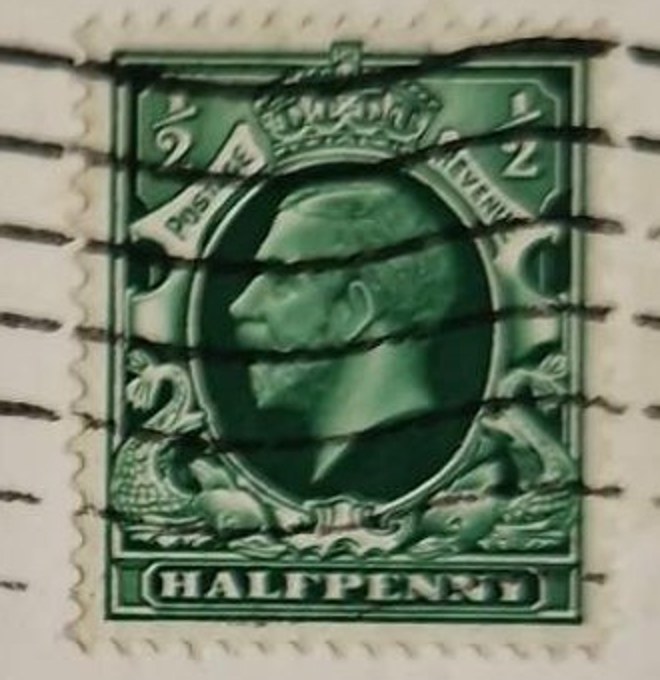
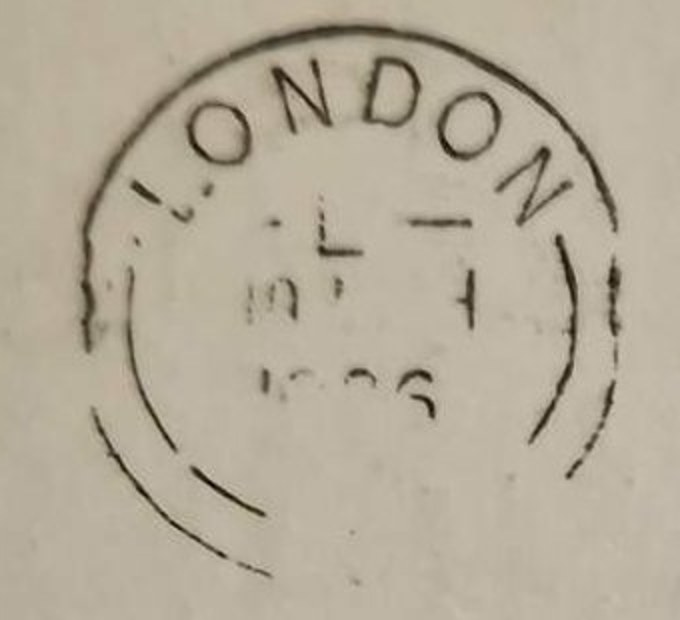
By 1923, certain printed items weighing up to two ounces could travel through the inland post for just half a penny.
So the envelope probably held something printed rather than a personal letter. And the book it was found in supplies the answer.
Tucked into the same pages was a printed notice of a meeting of the Royal Astronomical Society, dated 1936.
[PHOTO TO COME: the 1936 Royal Astronomical Society notice]
A printed notice. A halfpenny stamp at the printed-matter rate. A London postmark of the same year. It seems almost certain that this envelope carried that very notice from London to Windycroft.
We cannot prove the two travelled together. But they have stayed together, inside the captain's astronomy book, for nearly ninety years.
Even without them, the recipient's address tells us a great deal.
This was correspondence sent to a man whose life connected Victorian art, international naval history and the study of Britain's natural world.
A Life Preserved in the Archives
Tristan Dannreuther died in 1963, having lived at Windycroft for much of his later life.
Fortunately, his story has not disappeared.
The National Maritime Museum at Greenwich holds an extensive collection of his personal papers, including naval logs, official documents, correspondence and diaries dating from 1887 to 1958.
The National Portrait Gallery also holds portraits of him taken in 1917 by the photographer Walter Stoneman.
Those collections preserve the substantial record of a life lived across the Victorian age, two world wars and the middle of the twentieth century.
Our modest envelope represents just one small fragment of that history.
But sometimes a fragment is all that is needed to begin a discovery.
Why Small Pieces of History Matter
At Gohachi Books, we believe the history surrounding a book can be every bit as interesting as the words printed inside it.
A former owner's signature, a forgotten letter or an old envelope can turn an otherwise ordinary object into a doorway to another time.
The envelope addressed to Captain Tristan Dannreuther is one such doorway.
Its handwriting tells us where it was going. Its stamp places it in a vanished postal world. And its recipient leads us from the drawing rooms of Victorian London to the warships of the Royal Navy, from the German cruiser Königsberg to the migrating butterflies of Sussex.
All from a few lines of ink on a piece of paper.
At Gohachi Books, we believe every book has a story. Sometimes, the most remarkable story is the one tucked between its pages.
Researched and written for Gohachi Books, October 2026. Based on historical archives, contemporary natural-history records, and the original book, envelope and notice in the Gohachi collection.
Sources
• Royal Museums Greenwich: Tristan Dannreuther archive
• Noonans: Captain Dannreuther's medal group
• Historic England: Windycroft listing
• Battle & District Historical Society: The Dannreuther Family
• National Portrait Gallery: Tristan Dannreuther
A life at a glance
- 1872
- Born in London
- 1885
- Cadet, HMS Britannia
- 1906
- Commander
- 1915
- HMS Kinfauns Castle, East Africa
- 1918
- Captain
- 1919–21
- Assistant Director of Naval Intelligence
- 1922
- Retires to Windycroft, Hastings
- 1939
- The Dragonflies of East Sussex
- 1963
- Dies
Researched and written for Gohachi Books, October 2026. Based on historical archives, contemporary natural-history records, and the original book, envelope and notice in the Gohachi collection.


